






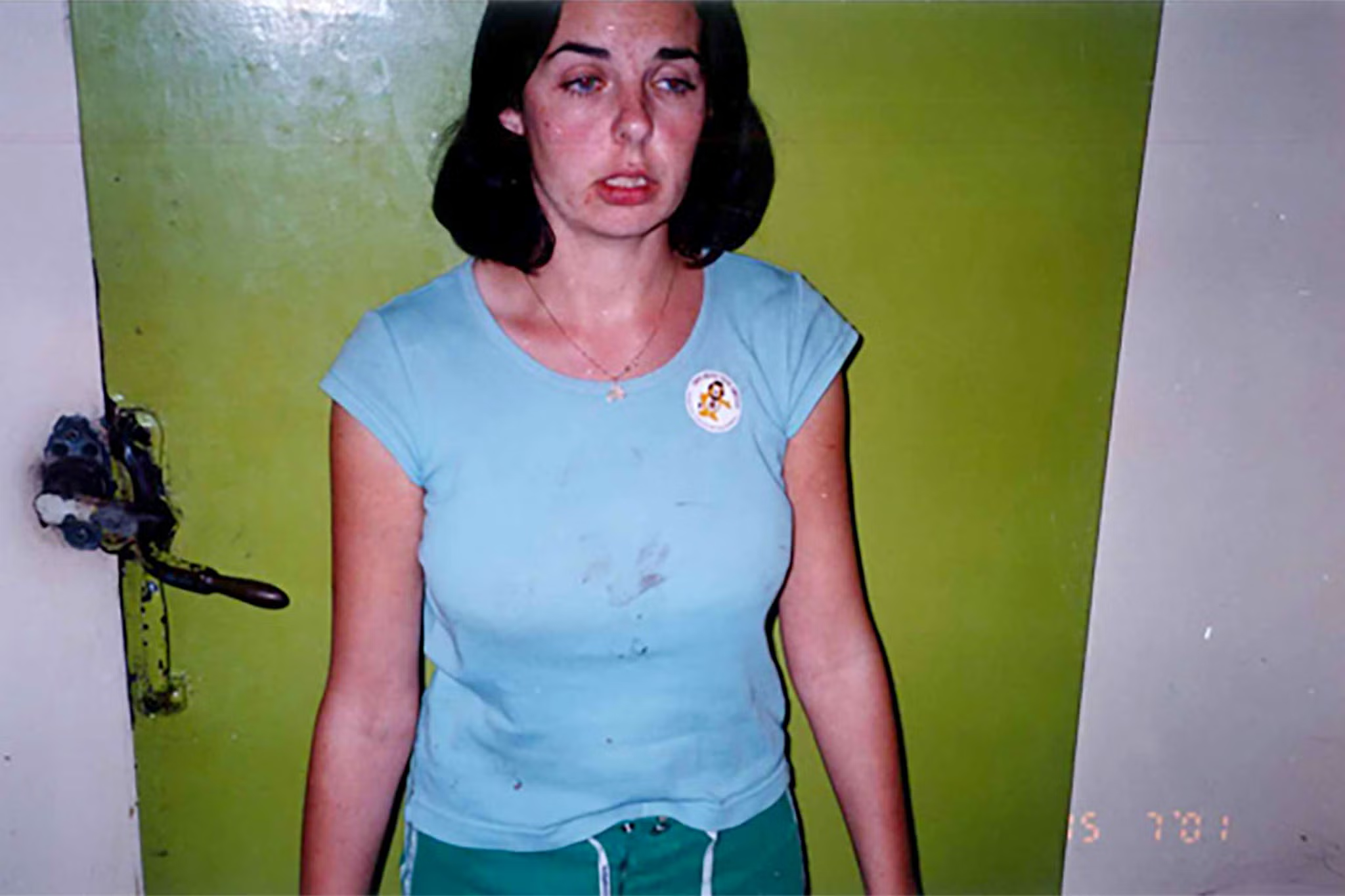
The Joanne Lees case remains one of the most widely discussed and emotionally gripping criminal stories in modern Australian history. Known for its mystery, media attention, and controversial public reactions, the case continues to spark curiosity years after the events unfolded. This article explores the key facts, a clear timeline, and the most important details surrounding Joanne Lees and the disappearance of Peter Falconio.
Who Is Joanne Lees?
Joanne Lees is a British woman who became internationally known following a tragic incident in the Australian Outback in 2001. At the time, she was traveling across Australia with her boyfriend, Peter Falconio. What began as an adventurous road trip quickly turned into a nightmare that captured global headlines.
Lees was thrust into the spotlight as both a victim and a key witness. Her behavior, media interviews, and public perception later became subjects of intense scrutiny, adding further complexity to the case.
Timeline of Events
July 2001: The Incident
Joanne Lees and Peter Falconio were driving along the Stuart Highway when they encountered a man who signaled them to stop. After pulling over, Falconio went to inspect the alleged issue. Moments later, Lees heard a gunshot.
She was then restrained and placed in the attacker’s vehicle. In a moment of courage, Lees managed to escape while the attacker was distracted. She hid in the surrounding bushland, avoiding detection for hours before flagging down a passing truck driver.
Immediate Aftermath
Lees was taken to safety, and authorities launched a large-scale investigation. The remote location and lack of witnesses made the case particularly challenging. Police relied heavily on Lees’ testimony and physical evidence found at the scene.
2002–2005: Investigation and Arrest
After an extensive investigation, police identified Bradley John Murdoch as the primary suspect. Evidence, including DNA and witness statements, linked him to the crime.
Murdoch was arrested and charged with the murder of Peter Falconio and the assault and attempted kidnapping of Joanne Lees.
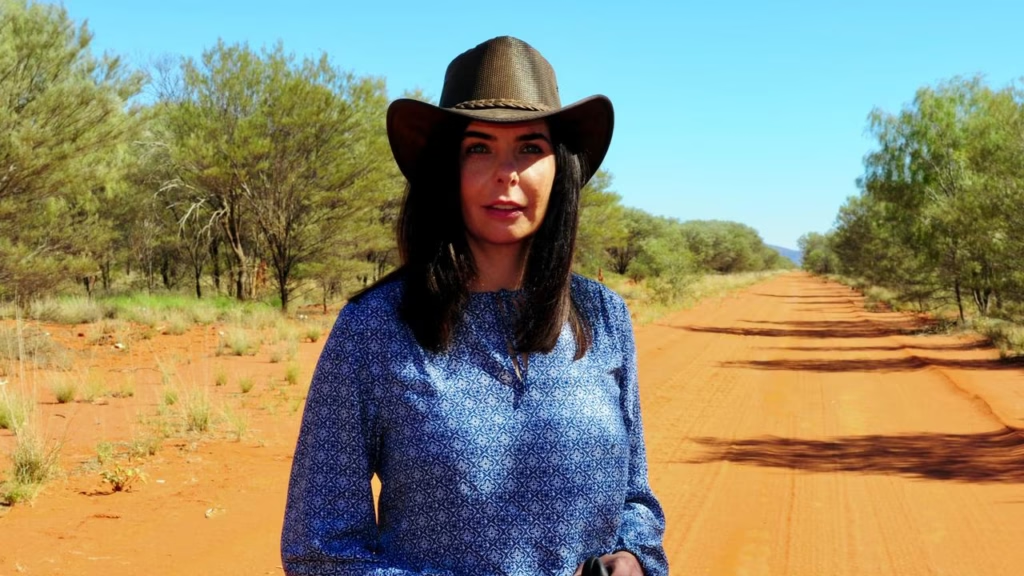
2005: Trial and Conviction
Murdoch’s trial attracted massive media attention. Joanne Lees testified in court, recounting the traumatic events. Despite intense cross-examination and public skepticism, her testimony remained consistent.
Murdoch was found guilty and sentenced to life imprisonment. However, he has consistently refused to reveal the location of Falconio’s body.
Controversies and Public Reaction
The Joanne Lees case was not just a criminal investigation—it became a media phenomenon. Lees faced significant public scrutiny, particularly regarding her emotional responses and media appearances.
Some critics questioned her behavior, while others defended her as a trauma survivor coping under extreme pressure. Experts later emphasized that trauma can affect individuals in very different ways, and there is no “correct” way to behave after such an event.
The intense media coverage often blurred the line between factual reporting and speculation, contributing to ongoing debate about the case.
Where Is Joanne Lees Today?
After the trial, Joanne Lees gradually stepped away from the public spotlight. She returned to the United Kingdom and has largely maintained a private life.
While she occasionally appears in documentaries or discussions related to the case, Lees has chosen to avoid ongoing media attention. Her story remains a powerful example of survival and resilience in the face of extreme adversity.
Why the Case Still Matters
The Joanne Lees case continues to attract attention for several reasons:
- Unresolved elements: The absence of Peter Falconio’s body leaves lingering questions.
- Media influence: The case highlights how media narratives can shape public perception.
- Human resilience: Joanne Lees’ survival story remains central to the case’s impact.
- Legal significance: The conviction of Murdoch demonstrates the role of forensic evidence and witness testimony in complex cases.
It also serves as a reminder of the dangers of remote travel and the importance of awareness and safety precautions.
Final Thoughts
The Joanne Lees case is more than just a criminal story—it is a complex narrative involving tragedy, survival, and public judgment. While the conviction of Bradley John Murdoch brought some closure, unanswered questions continue to keep the case relevant today.
Joanne Lees’ experience highlights both the strength required to survive such an ordeal and the challenges of living under public scrutiny. As interest in true crime continues to grow, this case remains a significant and thought-provoking example of how real-life events can captivate the world.